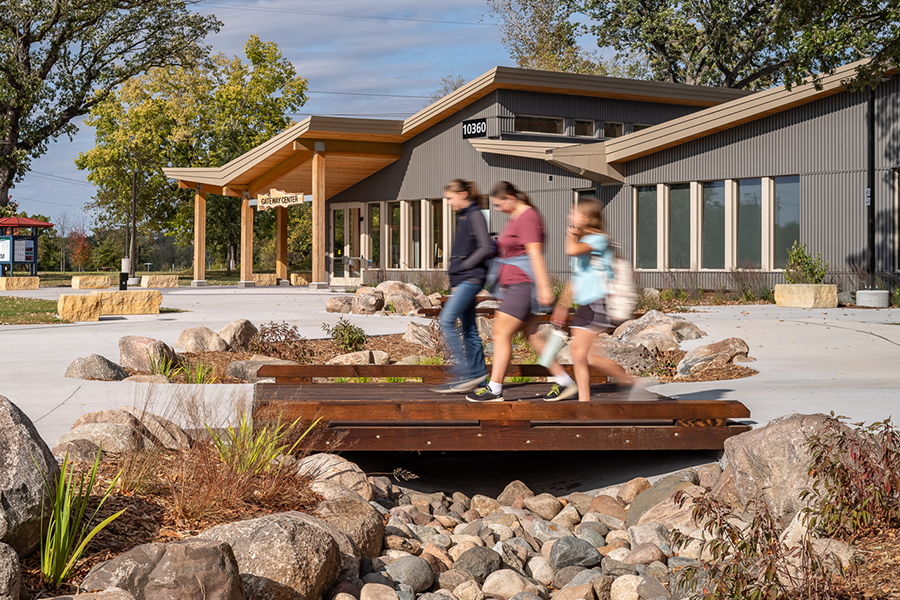
Mississippi Gateway Regional Park: A New Standard for Sustainable Park Design
in Perspectives
As we celebrate Earth Month, it’s an opportunity to reflect not only on the natural environments we value, but also on the role design plays in shaping a more sustainable future. The redevelopment of the Mississippi Gateway Regional Park illustrates how thoughtful, high-performance design can restore ecosystems, reduce environmental impact, and create meaningful, lasting connections between people and place.
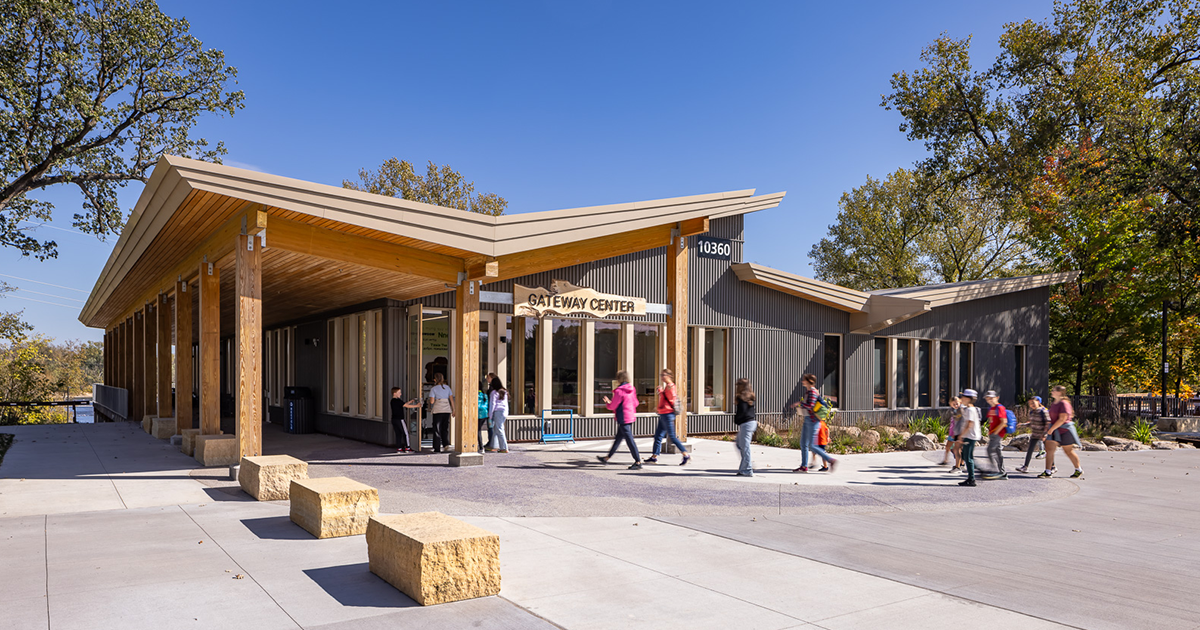
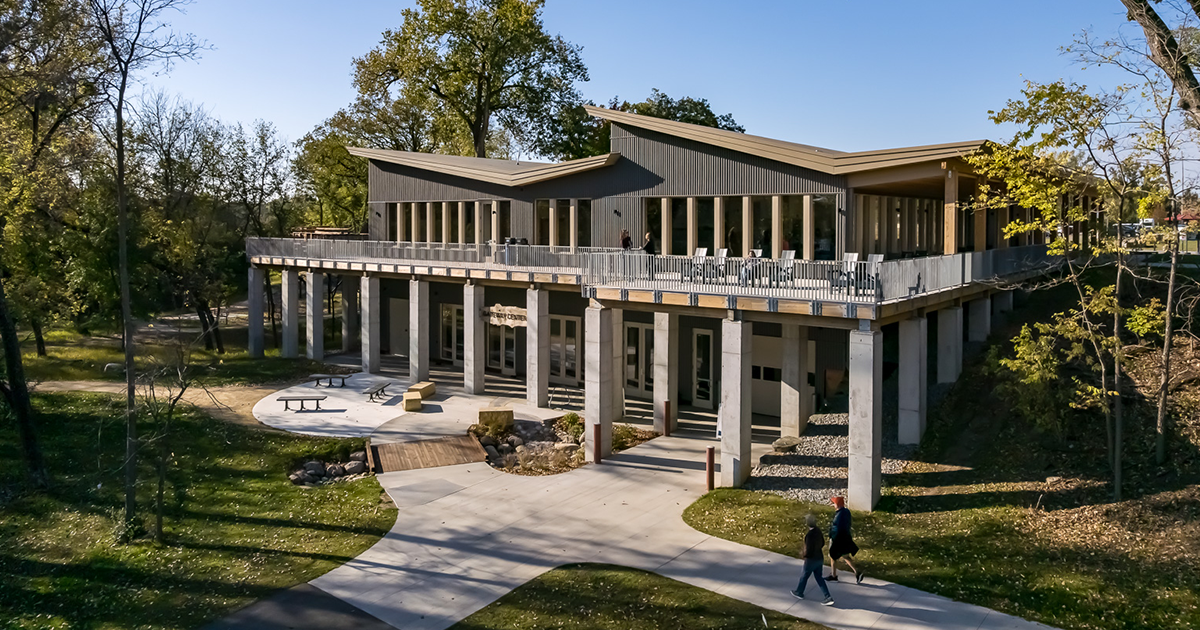
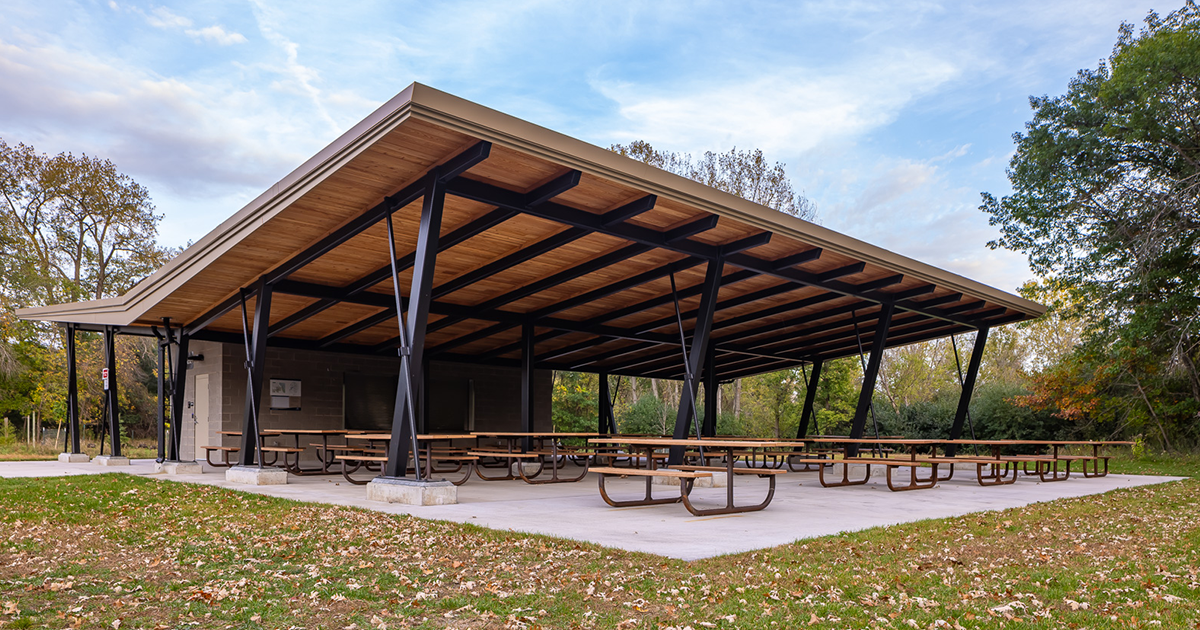
Set along the Mississippi River, this 290-acre regional park transforms what was once a fragmented landscape into a cohesive, future-forward destination that blends environmental stewardship with immersive education and community-focused design. From the earliest planning stages, sustainability was not treated as an add-on, but as a guiding principle informing decisions at every scale, from site strategies to building systems.
At the center of the park, the Gateway Center was designed to meet Minnesota’s B3 Sustainable Building Guidelines and establish a clear path toward Net Zero energy performance. A highly insulated and airtight building envelope minimizes energy loss, while daylighting strategies and occupancy-responsive lighting reduce overall energy demand. Energy recovery systems, natural ventilation, and a geothermal system that leverages shallow aquifers further enhance efficiency, significantly lowering operational carbon while maintaining a comfortable indoor environment year-round. The project also anticipates future needs, with infrastructure in place for solar photovoltaic systems that will allow the building to evolve toward full Net Zero performance over time.
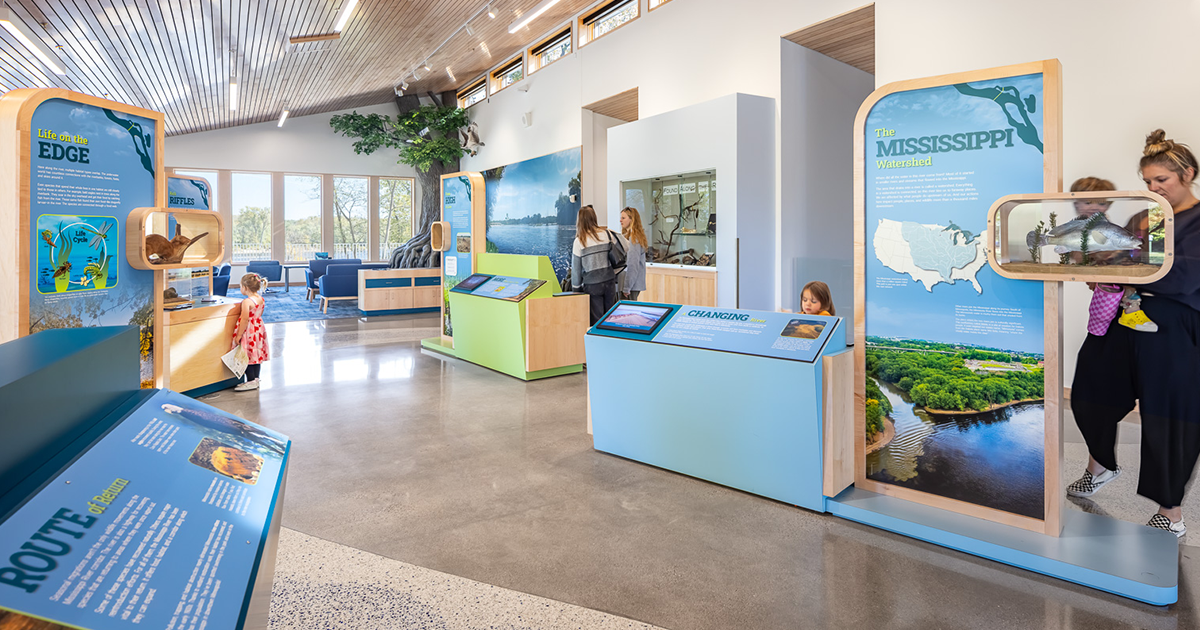
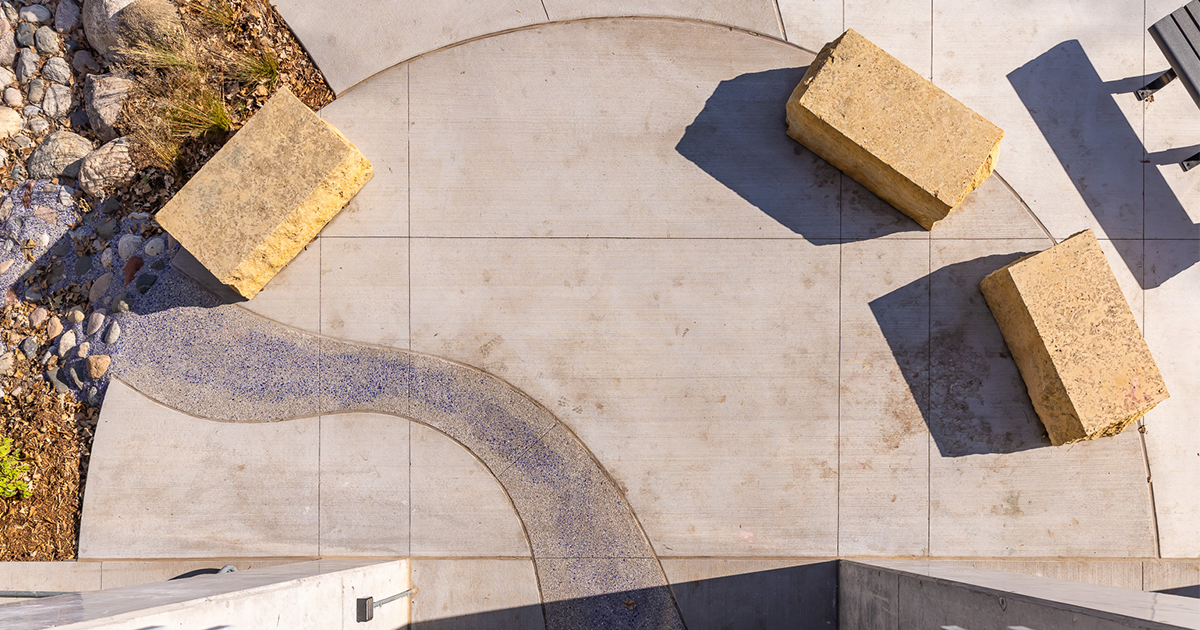
Water functions as an opportunity for both ecological performance and education. Stormwater is intentionally directed into a “Mini Mississippi” feature, creating an interactive experience that helps visitors understand natural water systems. Throughout the park, native planting, low-impact grading, and shoreline stabilization strategies protect the river’s floodplain while supporting biodiversity and long-term ecological health. The material choices reinforce this approach, with locally sourced stone, repurposed on-site wood, and sustainably manufactured products that reduce embodied carbon and support regional supply chains.
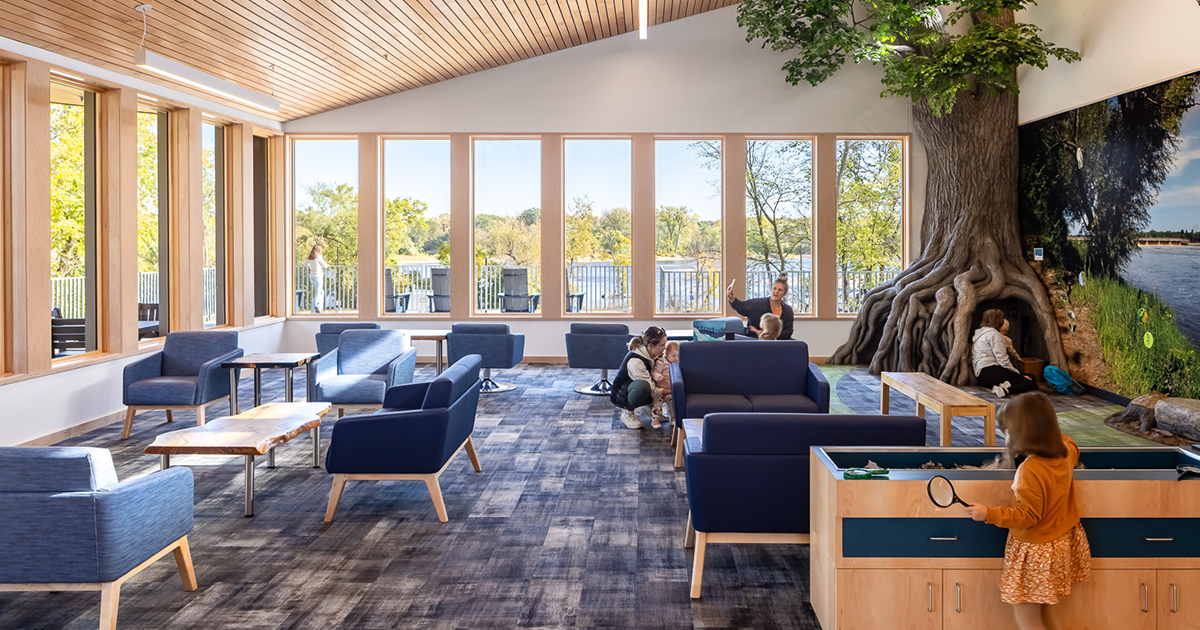
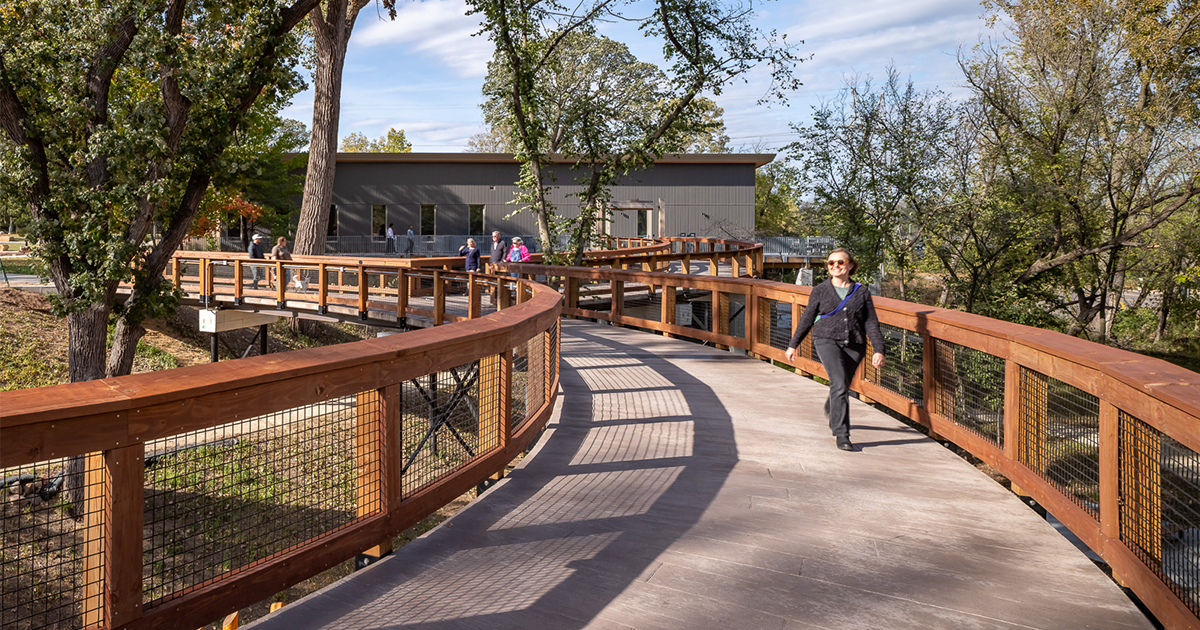
Equally important is the project’s focus on human health and inclusivity. Inside the Gateway Center, low- and no-VOC materials, carbon dioxide monitoring, and high-efficiency ventilation systems contribute to excellent indoor air quality. Outside, expanded trails, nature-based play areas, and year-round programming encourage active, healthy lifestyles while fostering a deeper connection to nature. The design also removes both physical and psychological barriers to access, creating a welcoming environment for visitors of all backgrounds. Transparent architecture, flexible points of entry, and community-informed design strategies ensure that the park feels open, intuitive, and accessible to everyone.
The impact of these strategies is both immediate and long-term. Since reopening, the park has experienced a dramatic increase in visitors, quickly establishing itself as a vibrant regional destination. This growth speaks to the project’s success in creating a place where people feel connected to the environment and to each other. At the same time, energy-efficient systems, reduced water consumption, and durable materials contribute to long-term operational savings and resilience, while the restoration and preservation of natural systems strengthen the ecological health of the Mississippi River corridor.
By integrating environmental responsibility, high-performance systems, and human-centered design, the project offers a model for how public spaces can respond to today’s environmental challenges while creating lasting value for future generations.
Thank you to all the project partners, including WSB (Civil Engineer, Landscape Architect); Split Rock Studios (Exhibit Designer); Emanuelson-Podas (MEP Engineer); Bolton & Menk (Civil Engineer); BKBM (Structural Engineer); Kvernstoen, Rönnholm & Associates (Acoustician); and H+U Construction (Construction Manager).